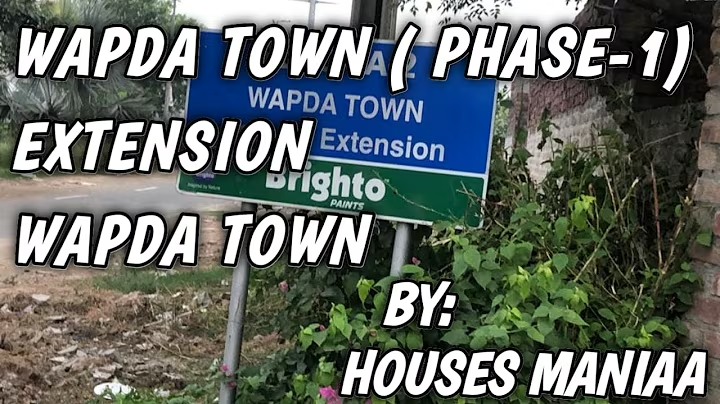
Wapda Town Phase 1 Extension Block A3
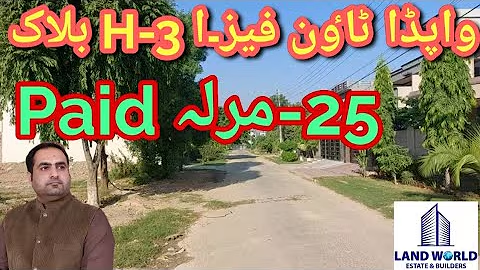
![[Vlog] WAPDA Town Phase 1 | Lahore](https://imghwzq.soufunimg.com/youtube/2urOOnHAaEo.jpg)
Details
Wapda Town was originally launched in 1978 for Water and Power Development Authority employees and later opened to the public, making it one of Lahore's oldest planned communities. It is an LDA-approved and NOC-cleared housing scheme spanning approximately 17,000 kanal with over 12,000 residential units across multiple phases. Block A3 in Phase 1 Extension is situated on Khayaban-e-Jinnah Road, offering a mature, self-contained environment with well-marked streets and 40-foot wide internal roads. The area serves as a central node in Lahore's western residential belt, providing strong connectivity and proximity to schools, hospitals, and commercial hubs.
- Developer: Consortium of qualified local builders (including Mega Builders) under the WAPDA Employees Cooperative Housing Society (WECHS).
- Ideal For: Ideal for end-users, investors, and developers seeking a mature, fully serviced community with strong capital appreciation potential and ready-to-build plots.
Map-calculated
In total
In total
Latest Updates
WAPDA Town Phase 1 Extension Block A3: Infrastructure Upgrades Drive 15% Plot Price Surge
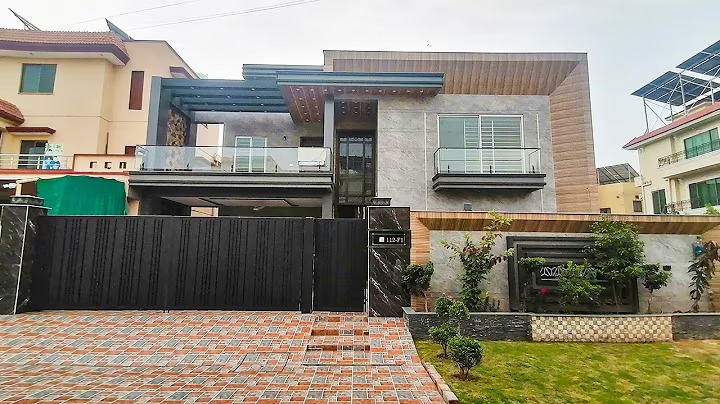
Recent local property news confirms that road tarmacking and new street-lighting installations in WAPDA Town Phase 1 Extension Block A3 have been completed, significantly enhancing the area’s appeal. These improvements have contributed to a roughly 15% year-on-year increase in plot prices. Developers are now actively marketing 5-marla and 10-marla plots, as well as larger 1-kanal houses, including a featured 1-kanal single-story home showcased in a recent TikTok video. Municipal authorities continue upgrading the water-supply and sewage-network infrastructure to support rising residential demand.

Gated and security-focused community with restricted entry and added security measures.

Convenient access to public transport via nearby bus stands, with options for buses, rickshaws, and private car-hailing services.
Good connectivity through newly widened Paswal Road, Canal Bank Road, and underpasses linking to GT Road and a future Margalla Avenue to motorway route.
Well-equipped with mosques, parks, schools, clinics, pharmacies, and commercial outlets in each block.
Smooth, carpeted roads in the more developed sections of the community.

Persistent potholes and poor road conditions, with some roads in pathetic state.
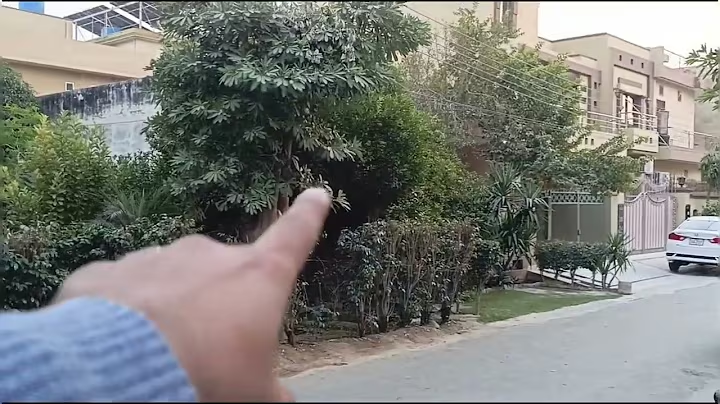
Block A3 is less fully developed compared to older blocks in Wapda Town.
Infrastructure and municipal services lag behind the promises, leading to complaints about overall service quality.
Inadequate waste-management practices, with hired staff sometimes scattering trash instead of properly collecting it.
Irregular water supply, often cut off without prior notice.