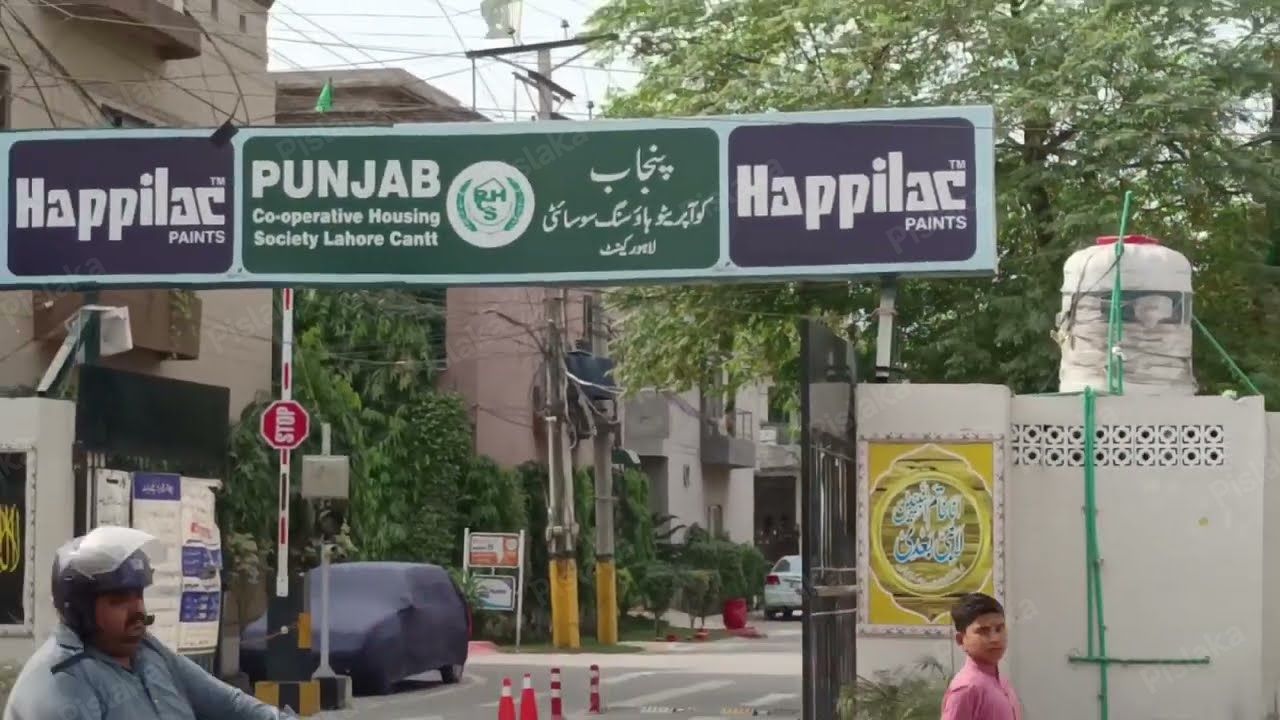
Punjab Cooperative Employees Cooperative Housing Society Ltd Lahore


Details
Punjab Cooperative Employees Cooperative Housing Society Ltd is a government-backed cooperative established to provide affordable, well-planned housing for government employees and middle-income families. The society offers a secure, gated community with reliable utilities, parks, schools, and hospitals, creating a peaceful suburban environment. Its prime location near Pine Avenue and major highways ensures excellent connectivity and long-term investment value.
- Developer: Punjab Cooperative Employees Cooperative Housing Society Ltd (Self-developed and managed under the Punjab Government’s cooperative housing scheme)
- Ideal For: Ideal for government employees, young families, retirees, and investors seeking secure, reasonably priced residential property in a well-serviced community.
Map-calculated
In total
In total
Latest Updates
Punjab Government Reverses Retroactive Stamp Duty Order for Cooperative Housing Societies in Lahore
In early 2026, the Punjab government rescinded its November 2025 notification that mandated retroactive stamp duty and collector’s fees for unit registration across ~600 cooperative housing societies in Lahore—impacting ~50,000 households. The reversal followed public backlash and legal scrutiny, including intervention by the Punjab and Haryana High Court. Under the revised framework, members listed in society records as of November 20, 2025 are eligible for concessional registration with zero stamp duty, only a 1% registration fee (capped at PKR 2 lakh), and no infrastructure cess.
New Punjab Gazette Rules (March 2026) Introduce Strict Ownership Caps and Digital Approval for Housing Schemes
A March 2026 amendment to the Punjab Gazette introduced sweeping regulatory reforms for housing schemes: ownership limited to five individuals or entities per plot; mandatory digital submission and approval of all applications; prohibition of ownership changes post-allocation; and strict planning standards scaled by land size (e.g., 500–5000 kanal schemes require wide roads, parks, and full infrastructure). These rules aim to enhance transparency, curb speculation, and protect buyers.
Punjab Waives Stamp Duty for Cooperative Society–Private Developer Mergers to Facilitate Redevelopment
To ease redevelopment bottlenecks and unlock stalled housing projects, the Punjab government announced a targeted waiver of stamp duty for mergers between cooperative housing societies and private developers. This policy aims to incentivize formal partnerships, improve infrastructure upgrades, and accelerate the conversion of aging or underutilized cooperative layouts into modern, compliant housing schemes—particularly relevant for Lahore-based societies facing land consolidation challenges.
Landmark Stamp Duty Concessions Introduced for Original Allottees and Transferees (Jan–Mar 2026)
On January 12, 2026, the Punjab government introduced time-bound, concessional stamp duty rates to formalize unregistered properties: original allottees exempted entirely; legal heirs, spouses, and family members also fully exempted. For transferees, rates were set at 1% until Jan 31, 2026; 2% until Feb 28; 3% until Mar 31, after which standard 6% rates apply. A statutory cap on society transfer fees was also imposed to prevent arbitrary charges.
WAPDA Employees Cooperative Housing Society (WECHS) Lahore Announces Secretary Recruitment (April 2026)
WAPDA Employees Cooperative Housing Society Ltd Lahore launched a high-profile recruitment drive in April 2026 for the position of Secretary (Contract Basis), targeting experienced or retired WAPDA engineers at BPS-20 or higher. The role entails comprehensive administrative, financial, and project management responsibilities—including procurement oversight, PPRA compliance, and infrastructure coordination—reflecting the society’s ongoing institutional strengthening and governance modernization efforts.
Punjab Cooperatives Department Completes Digitization of Layout Plans for 100 Societies (September 2024)
Although completed in September 2024, this milestone remains operationally active and foundational to current reforms: the Punjab Cooperatives Department finalized the digitization of layout plans for 100 cooperative housing societies across the province. This digital repository supports transparent land record management, enables integration with new digital approval systems (per March 2026 Gazette rules), and underpins enforcement of planning compliance—including for Lahore-based societies like WECHS and NFC Employees Housing.

Comprehensive civic amenities including paved and carpeted roads, street lighting, drainage system, sewage system, underground water pipelines, parks, schools, mosques, markets, hospitals, and graveyard.

Well-gated community with security walls, 24-hour security guards, and CCTV cameras.
LDA-approved housing society ensuring legal compliance and organized development.
Strategic location near Khayaban-e-Firdousi and PIA Main Boulevard, with easy access to Allama Iqbal International Airport and Kot Lakhpat Railway Station.

Shortage of funds leading to delayed infrastructure upgrades, including road repairs, replacement of old water and sewer pipes, and incomplete sewerage works.
Shortages in water supply and frequent load-shedding.